

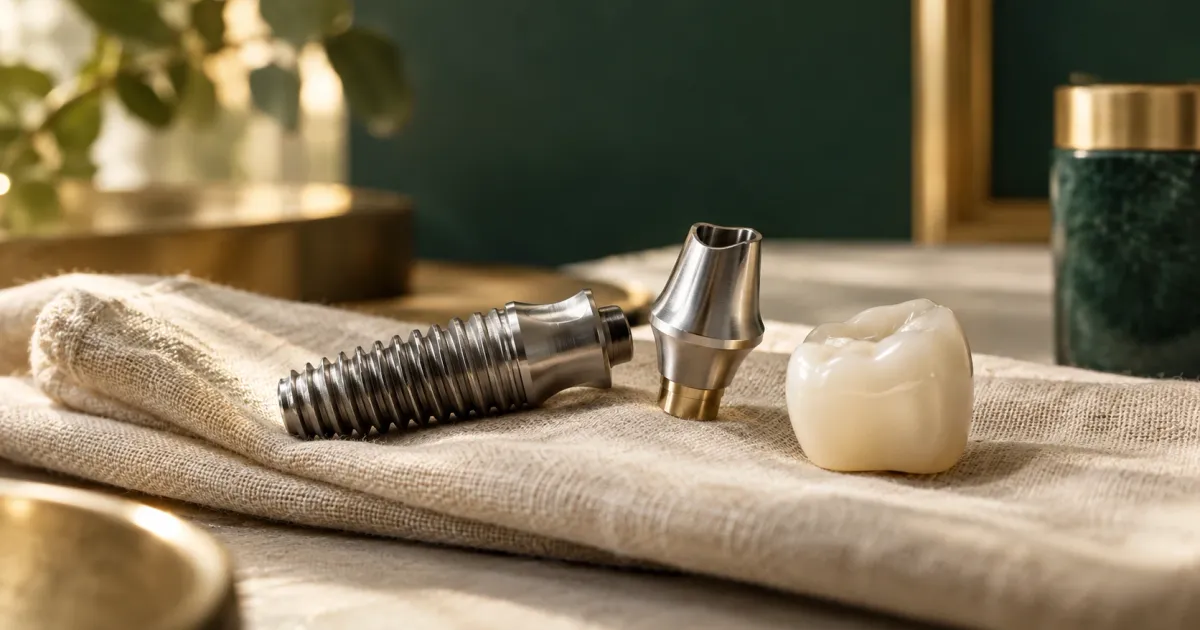
Dental implant recovery happens in two stages: an initial healing period of a few days, when mild swelling and discomfort are common, and a much longer phase of several months called osseointegration, when your jawbone bonds to the implant. How long the whole process takes is different for every patient, because it depends on your bone, your general health and the treatment plan your dentist designs for you. The only reliable timeline is the one you are given after an assessment.
This guide explains, in general terms, what usually happens at each stage and why. It does not replace the instructions your own dental team gives you. If anything here differs from what you are told personally, follow your clinic’s advice.
What “recovery” really means after an implant
People often use the word recovery for two different things:
- Initial healing. This is the normal response of your gums and surrounding tissue after the procedure. You notice it in the first days, and it is what most patients worry about.
- Osseointegration. This is the slow, quiet process by which bone grows in contact with the titanium implant and holds it in place. You cannot see or feel it, but it is what gives the implant its long-term stability.
You may feel fine after a few days and still need months before the implant is fully integrated. That is why check-ups and good habits remain important even once the discomfort has gone.
The first few days: what is commonly normal
Everyone reacts differently, but in the first days it is common to notice:
- Mild swelling around the area or in the cheek.
- Mild to moderate tenderness or discomfort.
- A small amount of oozing, or saliva tinged with blood, especially at the start.
- A tight or unfamiliar feeling when you touch the area with your tongue.
These usually ease as the days pass. If your dentist prescribes medication to manage discomfort, take it exactly as instructed and do not change the plan on your own.
Food and habits: what dentists usually advise, and why
These are general guidelines that many dentists give after placing an implant. Your own team will tell you which ones apply to you:
- Soft, lukewarm or cool food for the first days. Hard or very hot food can irritate the area and put pressure on it too early.
- Avoiding smoking. Smoking is linked to slower healing and more complications around implants, which is why dentists stress it.
- No vigorous rinsing or repeated spitting at first. The aim is not to disturb the tissue while it settles.
- Leaving the area alone. Avoid prodding it with fingers or tongue, or pulling your lip to look at it.
- Taking it easy. Avoid strenuous activity in the first days, as your dentist advises.
If your treatment includes something extra, such as a bone graft, the instructions may be stricter or last longer.
Gentle hygiene and follow-up appointments
Keeping your mouth clean matters, but around the treated area you need to be gentle. In most cases you carry on brushing the rest of your teeth as usual and follow specific instructions on how and when to clean near the implant. Your dentist may suggest a particular mouthwash or a soft-headed brush. Use only what they recommend.
Follow-up appointments are part of recovery, not a formality. They let the dentist check how your gums are healing, spot signs of inflammation that should not be there and, later on, decide whether the implant is ready for its crown or prosthesis. If your treatment ends with oral rehabilitation, that stage is planned according to how the implant is progressing at each visit.
Osseointegration: the recovery you cannot see
After the first healing comes the long part. During osseointegration, bone gradually grows against the implant surface until it holds it firmly. It is usually described as taking several months, but there is no single figure that fits every patient.


The timing can vary because of factors such as:
- Bone quality and quantity. Denser or thinner bone behaves differently, and sometimes it needs to be rebuilt before or during treatment.
- Whether a bone graft is needed. If so, the overall process is longer, because the graft has to heal too.
- The number of implants and where in the mouth they are placed.
- Your general health. Some medical conditions and habits affect how you heal.
- Your treatment plan, which sets when the final crown or prosthesis is fitted.
Careful planning helps anticipate these factors. At our clinic we use digital dentistry, including a 3D scanner and digital X-rays, to study your case in detail before the plan is decided.
Frequently asked questions after a dental implant
What can I eat after a dental implant?
For the first few days, soft, lukewarm or cool food that needs little chewing is usually advised: soups, mash, yoghurt, eggs, soft fish or well-cooked pasta. Chew on the opposite side and avoid anything hard, crunchy or sticky. Your dentist will tell you when you can gradually return to your usual diet.
When can I use a straw?
Many dentists advise avoiding straws at first, because the suction can disturb the healing area. Ask your dental team when it is fine to use one again.
When can I smoke after an implant?
Ideally, not at all during recovery, and it is a good moment to try to stop. Smoking slows healing and is linked to more problems around implants. If you smoke, mention it before the procedure so your dentist can take it into account.
When can I exercise?
Avoid strenuous activity for the first few days, as it raises pressure in the area and can encourage bleeding or swelling. A gentle walk is usually fine. Your dentist will tell you when to return to sport.
Is facial swelling normal?
Mild swelling in the cheek or around the area is a common reaction in the first days and usually goes down. It is not normal for it to keep growing, spread or come with a fever: in that case, contact the clinic.
How much time off work will I need?
It depends on the procedure and on your job. Many people with desk-based work go back fairly soon, while others need a little more rest. Raise it at your appointment so you can plan ahead.
When to contact the clinic
Having questions during recovery is perfectly normal. Get in touch with the clinic if you notice any of the following:
- Pain that is getting worse rather than better.
- Swelling that spreads or keeps growing.
- Heavy bleeding, or bleeding that does not stop.
- A fever.
- A persistent bad taste, discharge, or a feeling that something has moved.
If you have a high temperature, swelling that makes it hard to breathe or swallow, or bleeding you cannot control, go to an emergency department or call the emergency services straight away. Do not try to manage it alone.
So how long does the whole thing take?
The honest answer is that it depends. Straightforward cases involve fewer steps, while cases with a bone graft or several implants need more time and more appointments. What we can tell you is what is assessed to estimate it: the condition of your bone and gums, your medical history, the number of implants and the type of final restoration. With that information your dentist can give you an approximate timetable and adjust it if anything changes along the way.
If you are an overseas resident or visiting for an extended stay, tell the team about your plans during the assessment. They can explain how the stages and check-ups could fit around your dates. To see what the full process involves, read our page on dental implants in Benidorm. The cost of each case also depends on these factors and is explained after the initial assessment.
Book your free initial assessment in Benidorm
If you are considering an implant and want to know what recovery would look like for you, the most useful step is a personal examination. At Arango Dental Clinic in Benidorm, we offer a free initial assessment where we review your case and answer your questions.
You can contact the clinic to arrange your appointment.
This article is for general information only and does not replace a professional assessment or an individual diagnosis. Every case is different, so always follow your dentist's instructions.