

What is an intraoral scanner used for? It is used to take a digital 3D copy of your teeth and gums, instead of the traditional impression trays filled with putty. The scanner is a small handheld camera that your dentist moves around your mouth, building a three-dimensional model on screen as it goes. That model helps with diagnosis, with planning treatments such as orthodontics, implants and crowns, and with tracking changes in your mouth over time. It does not replace X-rays: the scanner sees the surface, while an X-ray shows what lies underneath.
What is an intraoral scanner?
An intraoral scanner, sometimes called a 3D dental scanner, is a wand-shaped device a little larger than an electric toothbrush. It has a camera and a light source at the tip and is connected to a computer, where an image of your teeth appears in real time.
It is part of what is known as digital dentistry: using digital tools to see, measure and plan in more detail. If you would like to know how we use it at our clinic, take a look at our page on digital dentistry in Benidorm.
How does an intraoral scanner work?
The idea is simple, even if the technology behind it is not:
- Your dentist glides the tip of the scanner over your teeth: the front, the back and the biting surfaces.
- The camera projects light and captures a large number of images every second.
- Software stitches those images together into a complete 3D model of each arch.
- Finally, it records how your upper and lower teeth meet when you close your mouth, which is known as your bite.
You can usually watch the model appear on the screen. Many patients find it helpful to see their own teeth enlarged, as it makes the dentist’s explanations easier to follow. How long the scan takes depends on each case and on what needs to be recorded.
What is a 3D intraoral scan used for in practice?
The digital model is the starting point for many treatments. Common uses include:
- Diagnosis and monitoring. It shows wear, receding gums or teeth that have shifted in detail, and scans from different visits can be compared.
- Orthodontics. It is used to study the position of your teeth and plan treatment, whether with braces or with aligners. If you are weighing up the two, you may find our article on braces or clear aligners useful, along with our orthodontics page.
- Crowns, bridges and dentures. The digital model is used to design the pieces that will replace or protect your teeth as part of oral rehabilitation.
- Implants. Alongside whatever X-rays or scans your dentist considers necessary, it helps to plan the position of a dental implant and the crown that will sit on top.
- Cosmetic dentistry. It helps to assess the shape and proportions of your teeth before cosmetic treatment.
Intraoral scanner vs traditional impressions: pros and cons
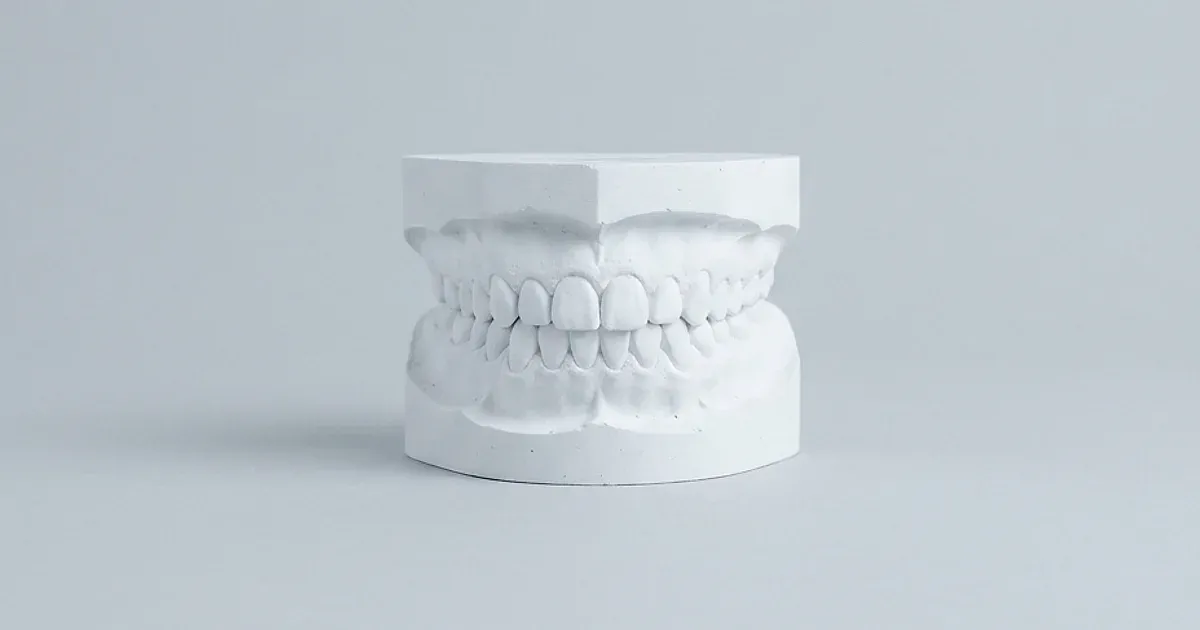
For years, the usual way to copy the mouth was an impression: a tray filled with putty (alginate or silicone) held in place until it sets. A plaster model, like the one in the picture, is then cast from it. Both methods still have their place.
Intraoral scanner
Pros:
- It is usually more comfortable, with no putty in your mouth and no unpleasant taste.
- It helps people who have a strong gag reflex with impression trays.
- If one area has not come out well, only that part is rescanned rather than the whole impression.
- The model appears on screen straight away and is stored digitally, so there is no physical mould that can warp or break.
- It makes it easier to compare your mouth from one visit to the next.
Cons:
- You need to keep your mouth open for a while as each tooth is scanned.
- In certain situations, your dentist may still prefer a traditional impression.
- It cannot see inside the tooth or the bone, which is what X-rays are for.
Traditional impressions
Pros:
- A well-established technique that works in many cases.
- Some treatments and laboratories still work with physical models.
Cons:
- The putty can feel uncomfortable and trigger the gag reflex.
- If the impression has a flaw, it usually has to be taken again in full.
- Physical models take up space and can deteriorate over time.
Your dentist will decide which method suits the treatment you need.
Does an intraoral scanner replace dental X-rays?
No. The two complement each other. The scanner captures the outer shape of your teeth and gums. A digital X-ray shows what cannot be seen with the naked eye: roots, bone, decay between teeth or infection. Depending on what needs to be checked, your dentist may use one, the other or both.
A common myth: “dental scanners give off radiation”
This is a very common worry, mostly because scanners get confused with X-rays. An intraoral scanner works with light and a camera, not X-rays. X-rays do involve radiation, in controlled doses, and they are only taken when they provide information your diagnosis needs. If you have any concerns, for example during pregnancy, mention them to your dentist.
Frequently asked questions
What is an intraoral scanner?
It is a handheld camera your dentist moves around your mouth to create a digital 3D model of your teeth and gums. In many treatments it is used instead of traditional putty impressions.
How does an intraoral scanner work?
It shines light on your teeth and captures a rapid series of images. Software joins them into a three-dimensional model that builds up on screen as the scan progresses, including a record of your bite.
Do intraoral scanners use radiation?
No. Intraoral scanners use light and a camera, not X-rays. Radiation is only involved when X-rays are taken, and your dentist will only request them when they are needed for your diagnosis.
Can an intraoral scan help if dental impressions make me gag?
It often helps, because there is no tray full of putty sitting at the back of your mouth. You still need to keep your mouth open while the scanner moves around, but you can ask for a break at any time.
Is an intraoral scanner used for crowns, implants and aligners?
Yes, these are some of its main uses. The digital model is used to design crowns and bridges, to plan orthodontic treatment with aligners or braces, and, together with X-rays, to plan implants.
How much does an intraoral scan cost?
It varies from clinic to clinic. At Arango Dental Clinic the scan is part of the assessment and diagnosis for your treatment rather than a separate charge. You will receive an exact quote for your treatment after the free initial assessment.
Every case is different
A scanner is a tool, not a diagnosis. What appears on screen is interpreted by your dentist together with an examination, your symptoms and, when needed, X-rays. That is why it is not a good idea to draw conclusions from an image on your own: your dentist will explain what it means in your case and what options you have.
When not to wait for a check-up
For a mild niggle, a routine appointment is usually fine. But if you have severe pain that is getting worse, swelling in your face, a fever, or difficulty swallowing or breathing, do not wait for a routine visit: contact the clinic or the emergency services (112) straight away.
Book your free initial assessment in Benidorm
If you would like to know the real state of your teeth, or you are considering orthodontics, implants or cosmetic treatment, Arango Dental Clinic offers a free initial assessment at our clinic in Benidorm, using whichever digital dentistry tools your case needs. After examining you, we will explain your options and give you an exact quote. You can get in touch with us to book your appointment.
This article is for general information only and does not replace a professional assessment or an individual diagnosis. Every case is different, so always follow your dentist's instructions.