

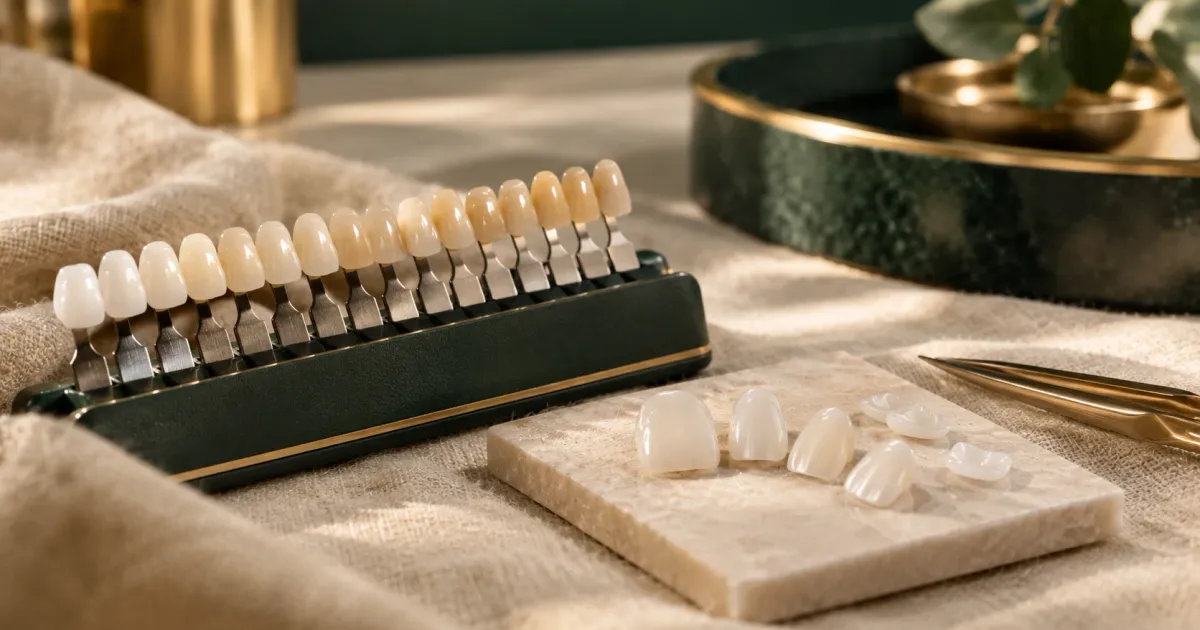
The main difference between veneers and teeth whitening is this: whitening lightens the colour of your natural teeth without changing their shape, while veneers alter the look of the visible surface of the tooth, including its colour, shape and, in some cases, its apparent alignment. They are not really rivals, because they solve different problems. Which one suits you depends on exactly what you want to change and on the health of your mouth, which only an examination can tell you.
What professional teeth whitening is
Whitening lightens the shade of natural teeth using products that act on stains and on the colour of the tooth itself. When it is done professionally, a dentist supervises the process, adapts it to you and first checks that your mouth is ready for it.
It helps to understand its limits:
- It changes colour, not shape. If a tooth is small, chipped or twisted, whitening will not correct that.
- It only works on natural tooth structure. Crowns, fillings and veneers do not whiten, so they can end up a different shade from the rest of your teeth.
- Results depend on the type of stain and on the individual. Not every tooth responds in the same way.
- It can cause temporary sensitivity in some patients. If that happens, let your dentist know.
What dental veneers are
Veneers are very thin shells, usually made of porcelain or composite resin, bonded to the front surface of a tooth. They can change the colour, shape, size and overall appearance of several teeth at once.
Unlike whitening, veneers involve a procedure on the tooth. In many cases a thin layer of enamel has to be removed so the veneer fits properly, which is why it is a decision to weigh up carefully and with full information. Veneers also do not last forever: over time they may need repair or replacement, and they depend on good hygiene and regular check-ups. Ceramic materials generally resist staining well, but they are not immune to wear.
Teeth whitening: pros and cons
Pros:
- It is minimally invasive. The structure of the tooth is not altered.
- It keeps your natural teeth as they are, just in a lighter shade.
- It is often the first step when colour is the only thing that bothers you.
Cons:
- It does not change the shape, size or position of your teeth.
- It does not work on crowns, fillings or veneers.
- Its effect can fade over time depending on your habits.
- It can cause temporary sensitivity in some people.
Veneers: pros and cons
Pros:
- They change several things at once: colour, shape, size and the look of the visible surface.
- They can disguise small chips, wear, gaps or minor irregularities.
- Porcelain veneers resist staining well.
Cons:
- They involve a procedure on the tooth, often removing a thin layer of enamel.
- They do not last forever: over time they may need repair or replacement.
- They need upkeep, good hygiene and regular check-ups.
Which suits which situation?
These pointers are general. The final decision is always made after an examination:
- Your teeth are healthy and well shaped, but darker or more yellow than you would like. Whitening is often the first option to consider, because it is less invasive.
- You are bothered by the shape or size of a tooth, or you have small chips, wear or gaps you would like to close. Veneers may be an option.
- You have stains that do not respond to whitening, depending on their cause, or teeth in very different shades. Veneers can sometimes give a more even result.
- Your teeth are slightly out of line. Veneers can disguise minor irregularities, but in other cases orthodontics may be the better route to move teeth into position. Your dentist will advise what fits your situation.
Can you combine them?
Yes, and it is quite common to plan them together. Because veneers do not change colour with whitening, the sensible order is to lighten your natural teeth first and, once you are happy with the shade, choose the colour of the veneers to match it. That way the rest of your teeth do not end up darker than the restorations.
If you are considering both, tell your dentist from the start so the steps can be put in the right order and the result looks harmonious. At our clinic, smile design is part of our cosmetic dentistry, with the aim of a result that looks natural on your face.
Maintenance and everyday habits
No cosmetic treatment lasts the same length of time for everyone. Some habits clearly make a difference:
- Coffee, tea, red wine and other strongly coloured drinks can gradually stain natural teeth and reduce the effect of whitening.
- Smoking stains teeth and is bad for gum health.
- Good daily hygiene and regular check-ups help keep both natural teeth and veneers in good condition.
- Avoiding biting hard objects such as pens, nails or ice protects both enamel and restorations.
Your dentist will give you advice specific to your case. If you notice discomfort, or a veneer feels loose or chipped, do not wait: contact the clinic.
Frequently asked questions
Can you whiten veneers?
No. Whitening products act on natural teeth, not on the porcelain or resin of veneers. If you want lighter teeth, it is best to whiten before your veneers are made, so their colour can be matched to the new shade.
Composite or porcelain veneers?
Composite (resin) veneers are shaped directly on the tooth and are easier to touch up, although they tend to stain and wear more over time. Porcelain veneers are custom-made and usually keep their colour and lustre better. Which suits you depends on your case and what you want; your dentist will explain the options.
Are whitening strips or home kits a good alternative?
Over-the-counter products exist, but whitening supervised by a dentist means your mouth is checked first, the treatment is adapted to your teeth and sensitivity is monitored. Your dentist will tell you which approach suits you.
How long does whitening last?
It varies from person to person and depends heavily on habits: coffee, tea, red wine and smoking make teeth darken again sooner. Good hygiene and regular check-ups help the result last longer.
How much does each treatment cost?
There is no single price: it depends on how many teeth are treated, the material and what you need. We give you an exact quote after the free initial assessment.
Why the assessment comes first
Before any cosmetic treatment, your dentist needs to make sure your mouth is healthy. That usually means checking for cavities, making sure your gums are in good condition and looking for underlying problems that should be dealt with first. If your gums are inflamed, for example, they may need gum treatment first, because cosmetic results depend on a healthy foundation.
The examination is also a chance to talk about what you hope for and what is realistic in your case. The cost varies according to what you need and is explained once the assessment has been carried out.
Book your free initial assessment in Benidorm
If you are unsure whether veneers or whitening is right for you, or you are interested in combining them, the most useful step is a personal examination. At Arango Dental Clinic in Benidorm, we offer a free initial assessment to review your mouth, listen to what you are looking for and explain your options.
You can read more about cosmetic dentistry in Benidorm or contact the clinic to arrange your appointment.
This article is for general information only and does not replace a professional assessment or an individual diagnosis. Every case is different, so always follow your dentist's instructions.