

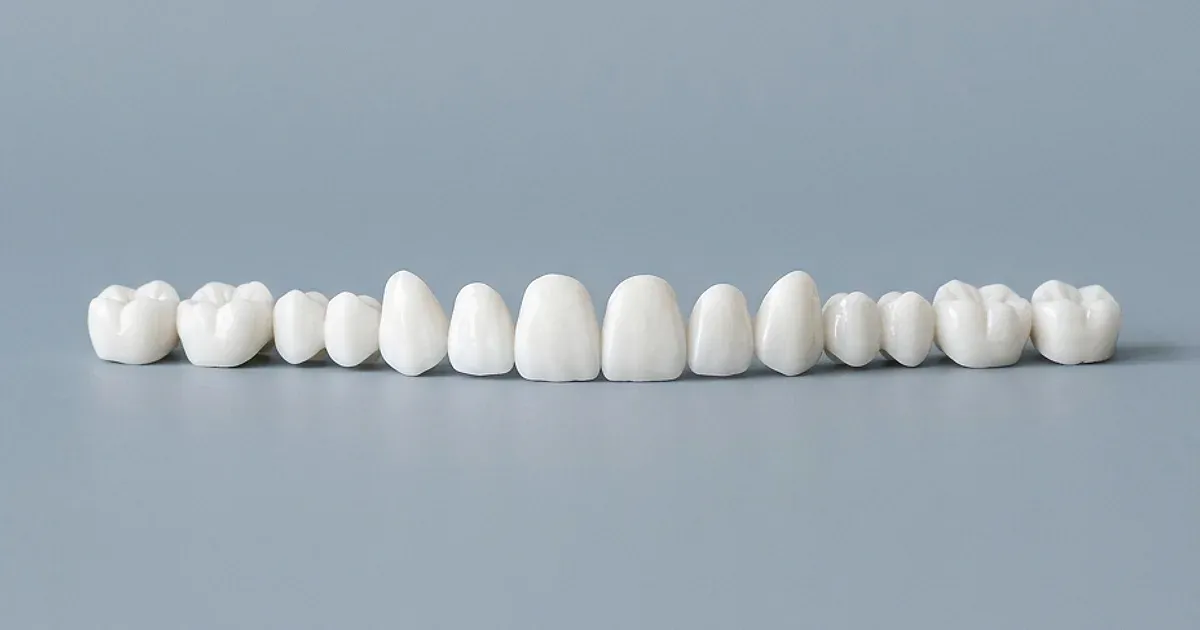
Dental bridge or implant: which is better? It depends on your situation. Both replace a missing tooth, but they work in very different ways. A bridge is anchored to the teeth on either side of the gap, which need to be prepared to hold it, and it is usually quicker to complete. An implant replaces the root as well and leaves the neighbouring teeth untouched, but it involves minor surgery and a healing period. Which one suits you depends on the health of the surrounding teeth, how much bone you have and your general health, and only your dentist can tell you after a proper examination.
Why a missing tooth is worth replacing
Losing a tooth is not just about appearance. Over time, the teeth next to the gap tend to tilt into it, and the opposing tooth can drift up or down because it no longer has anything to bite against. That can change your bite and overload other teeth. The bone in that area also tends to shrink once there is no root to stimulate it.
So, unless your dentist advises otherwise, replacing the tooth is usually the sensible route. The most common options belong to oral rehabilitation: crowns, bridges and dentures, sometimes combined with implants.
What a dental bridge is and how it works
A dental bridge is a fixed restoration that replaces one or more missing teeth by resting on the teeth either side of the gap. Those supporting teeth, known as abutments, are reshaped to receive a crown, and the replacement tooth or teeth are joined between them. The whole piece is fixed in place and is not removed at home.
In broad terms, the process looks like this:
- Examining your mouth to check the supporting teeth are healthy and well supported.
- Preparing the supporting teeth and recording your bite, for example with an intraoral scanner.
- If needed, fitting a temporary bridge while the permanent one is made.
- Adjusting and fixing the permanent bridge to your bite.
Fixed bridge or removable denture
When people talk about a bridge, they usually mean a fixed bridge like the one above. When several teeth are missing, a removable partial denture is sometimes used instead. These are different solutions with different care routines, and your dentist will explain which one suits you.
What a dental implant is
An implant is a small titanium post placed in the jawbone that does the job of a tooth root. Once the bone has bonded with it, a crown is fitted on top. The result is a fixed tooth that does not rely on its neighbours. You can read more about the process on our dental implants in Benidorm page, or in our article on dental implant recovery.
Dental bridge vs implant: pros and cons
Neither option is simply good or bad. Each has strengths and limitations.
Dental bridge
Pros:
- No surgery is needed, so it can be an option when surgery is not advisable.
- Treatment is usually completed sooner than with an implant.
- It can help when there is not enough bone for an implant and bone grafting is not wanted.
- If the neighbouring teeth already need crowns, the bridge makes use of that work.
Cons:
- The neighbouring teeth must be reshaped, even if they are healthy.
- The supporting teeth carry more load, because they also hold the missing tooth.
- The area under the replacement tooth needs careful cleaning, with special floss or interdental brushes.
- It does not stop the bone shrinking where the tooth was lost.
Dental implant
Pros:
- It does not involve the neighbouring teeth.
- It replaces the root too, which helps preserve the bone in that area.
- It is cleaned much like a natural tooth.
- It stands on its own: a problem with a neighbouring tooth does not affect it.
Cons:
- It requires minor surgery and a healing period before the final crown.
- It needs enough bone; sometimes bone has to be rebuilt first.
- It is not suitable for everyone: some medical conditions and habits, such as smoking, can affect the outcome.
Which suits which situation?
Some situations point towards one option or the other, as a general guide only:
- The neighbouring teeth are healthy with no large fillings. Avoiding reshaping them usually matters more, which favours an implant.
- The neighbouring teeth are heavily restored or need crowns anyway. A bridge may make more sense, since those teeth would be treated regardless.
- There is little bone or surgery is not recommended. A bridge can be a reasonable alternative.
- Several teeth in a row are missing. An implant-supported bridge is sometimes considered.
The decision is made after a full examination and, usually, imaging.
Implant-supported bridges: a middle ground
When several teeth in a row are missing, you do not always need one implant per tooth. In some cases implants are placed at each end of the gap and a bridge is fixed on top, replacing the teeth in between as well. That avoids reshaping natural teeth and reduces the number of implants. Whether it is possible depends on your bone and the position of your teeth, and we assess it case by case as part of an oral rehabilitation plan.
How long does a dental bridge last?
A well-made, well-cared-for bridge can last for many years, but there is no fixed figure. How long it lasts depends mainly on the health of the supporting teeth and gums, your daily cleaning routine, the biting forces in that area and habits such as clenching or grinding. The same applies to implants: their outlook depends on care and regular check-ups. Your dentist will give you an estimate based on your case.
Healthy gums are key for both options. If you notice bleeding or swelling around a bridge or an implant, it is worth getting it checked; you can read more on our gum disease treatment page.
A common myth: “an implant is always the superior choice”
Implants have clear advantages, but they are not the answer for everyone. If bone is lacking, surgery is not advisable or the neighbouring teeth already need crowns, a bridge can be a sensible solution. The right choice is the one that fits your mouth, not the one that sounds most modern.
Frequently asked questions
Which is better, a dental bridge or an implant?
Neither is better in every case. An implant avoids reshaping the neighbouring teeth and helps preserve bone; a bridge avoids surgery and is usually finished sooner. The choice depends on your teeth, your bone and your general health.
What are the pros and cons of a dental bridge?
A bridge needs no surgery and is usually quicker to complete. On the other hand, the neighbouring teeth must be reshaped and carry extra load, the area underneath needs careful cleaning, and it does not prevent bone loss where the tooth is missing.
Is a bridge or an implant better for front teeth?
It depends on the gum line, the bone and the condition of the teeth either side. Front teeth are very visible, so your dentist will weigh both appearance and long-term health before recommending an option.
What is an implant-supported bridge?
It is a bridge fixed onto implants rather than natural teeth. It is mainly used when several teeth in a row are missing, so they can be replaced without reshaping healthy teeth.
Does getting a dental bridge hurt?
The supporting teeth are prepared under local anaesthetic, so most people find the procedure comfortable. Some sensitivity for a few days afterwards is common; if it gets worse rather than better, contact your dentist.
How much does a bridge or an implant cost?
It depends on each case: the number of teeth, the materials and whether any treatment is needed first. We give you an exact quote after the initial assessment, which is free.
Every case is different
This article is general information and is no substitute for an appointment. Your gums, your bone, any medication and habits such as smoking can all change your options; your dentist will advise you.
When not to wait
If a bridge feels loose, comes away or hurts when you bite, book an appointment rather than leaving it: the sooner it is checked, the easier it usually is to fix. And if you have a fever, facial swelling that is getting worse, or difficulty swallowing or breathing, contact the clinic or the emergency services (112) without delay.
Book your free initial assessment in Benidorm
If you have a missing tooth and are weighing up a dental bridge or an implant, Arango Dental Clinic offers a free initial assessment at our clinic in Benidorm. We examine your case, explain which options are realistic and give you an exact quote. You can find out more about our oral rehabilitation in Benidorm or get in touch with us to book your appointment.
This article is for general information only and does not replace a professional assessment or an individual diagnosis. Every case is different, so always follow your dentist's instructions.